

Embellished Sandals After Summer: Inspect Every Attachment Before Storage
Inspect every rhinestone attachment before storing these sandals, and isolate the pair if any setting moves, catches, or is missing. The listing does not provide a repair method, so an October inspection should stop at observation and cleaning rather than improvising glue or hardware work.
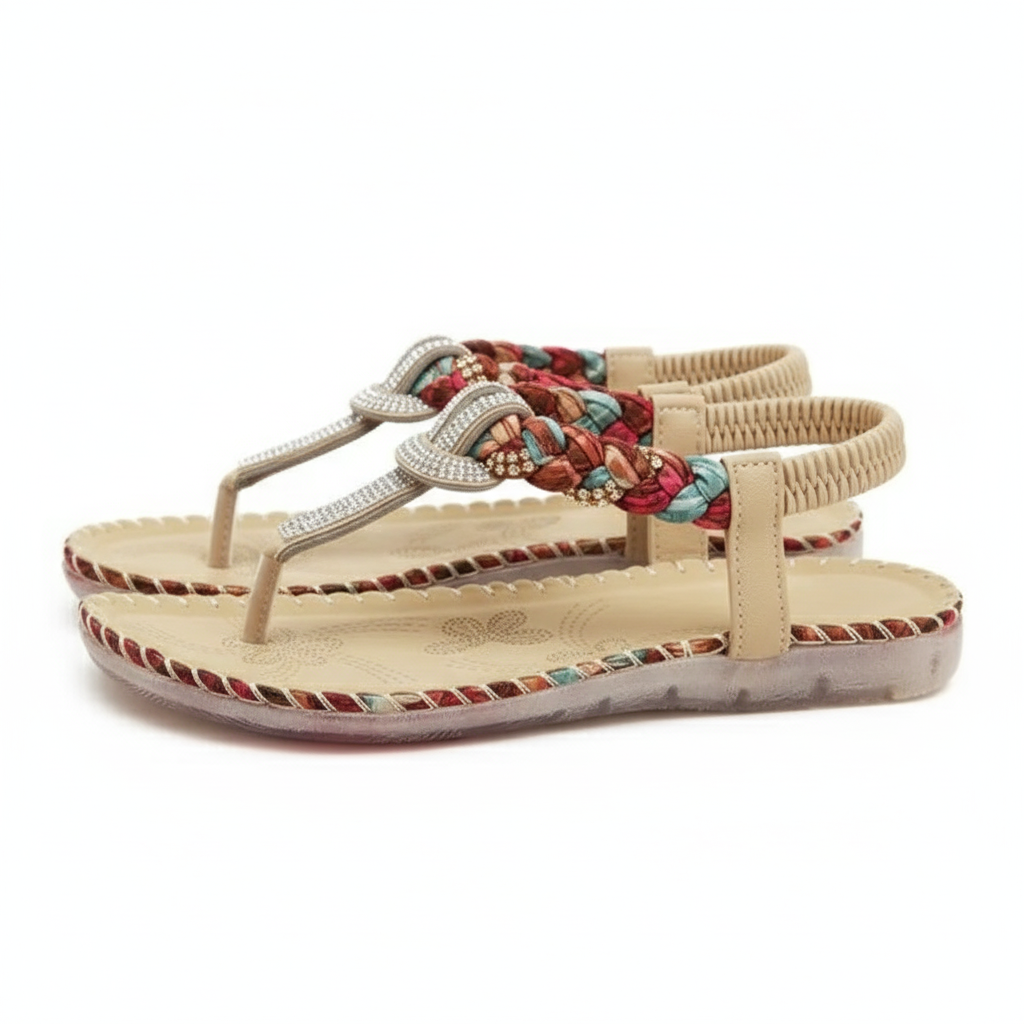
Follow the weave, not a generic checklist
Place the Beige or Black pair on a light towel. Begin at the inner edge of one sandal and follow each woven strip to the outer edge. At every rhinestone setting, look from above and then from the side. Repeat on the other sandal in the same direction so no section is skipped.
Next, inspect where the PU-leather upper meets the rubber sole and look across the flat heel. The product is a slip-on offered in sizes 6–10. Those are exact construction and option facts; the listing’s “anti-slip” wording is not evidence of performance on a specific floor.
Sort the finding
| Observation | Storage action |
|---|---|
| All settings appear fixed; surface is clean and dry | Separate the embellished uppers with soft, clean material so they do not rub one another. |
| Dirt around a setting | Use only care directions supplied with the delivered product. The online listing gives no exact cleaning sequence. |
| Loose, lifted, or missing setting | Photograph it, keep the pair out of rotation, and request product-specific repair guidance from the seller or manufacturer. |
Do not store while damp and do not invent a repair from the material name alone. The finished task is a documented condition decision: ready to store, needs approved cleaning guidance, or held for approved repair guidance.